
Licensing system
In Fountain you choose between entities or tiers, each with levels and multipliers for each level.
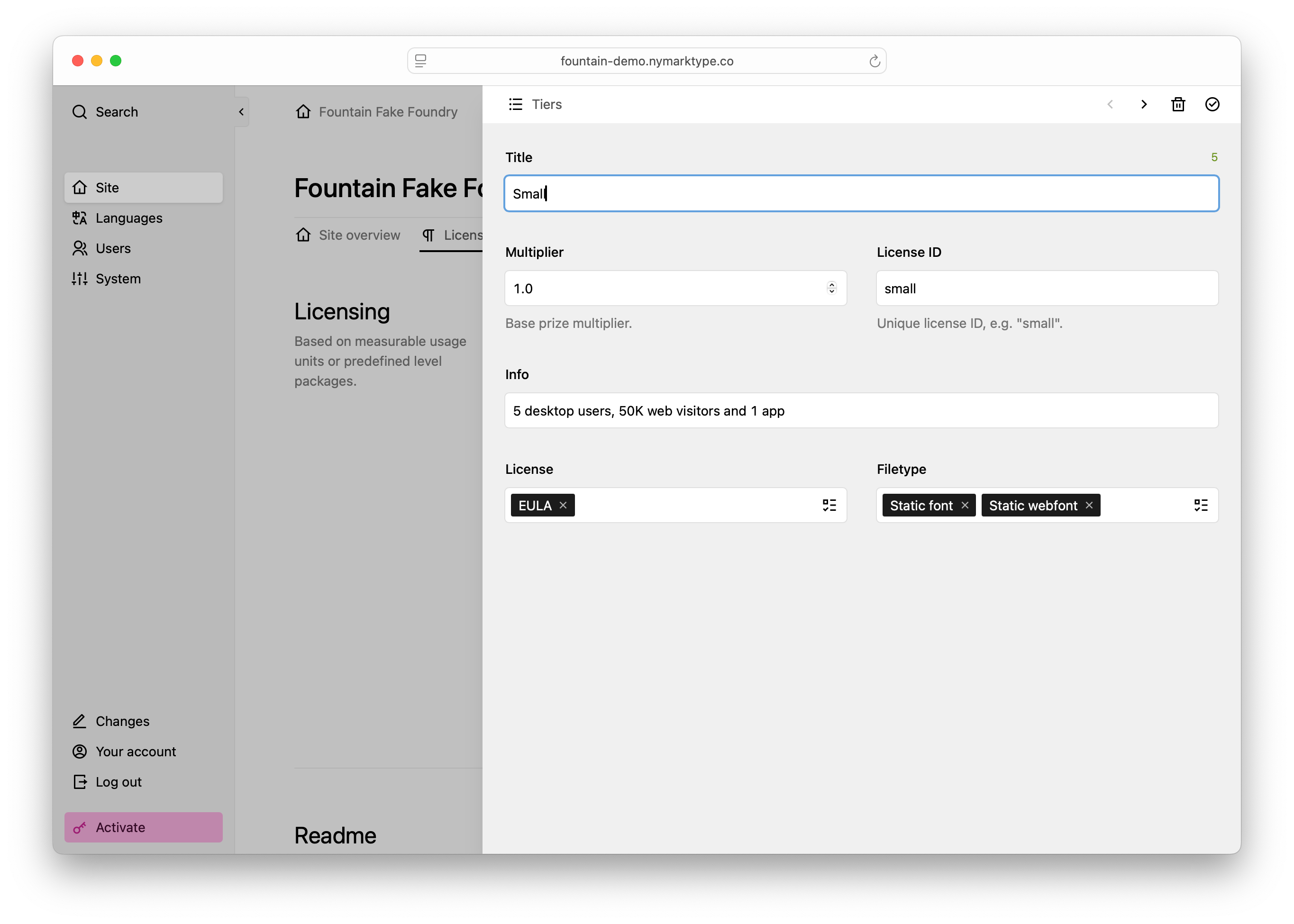
Tier
Predefined packages (by you) e.g. organized by size (small/medium/large) or by plan (starter/pro/enterprise). Each tier has distinct features, limits, and pricing.
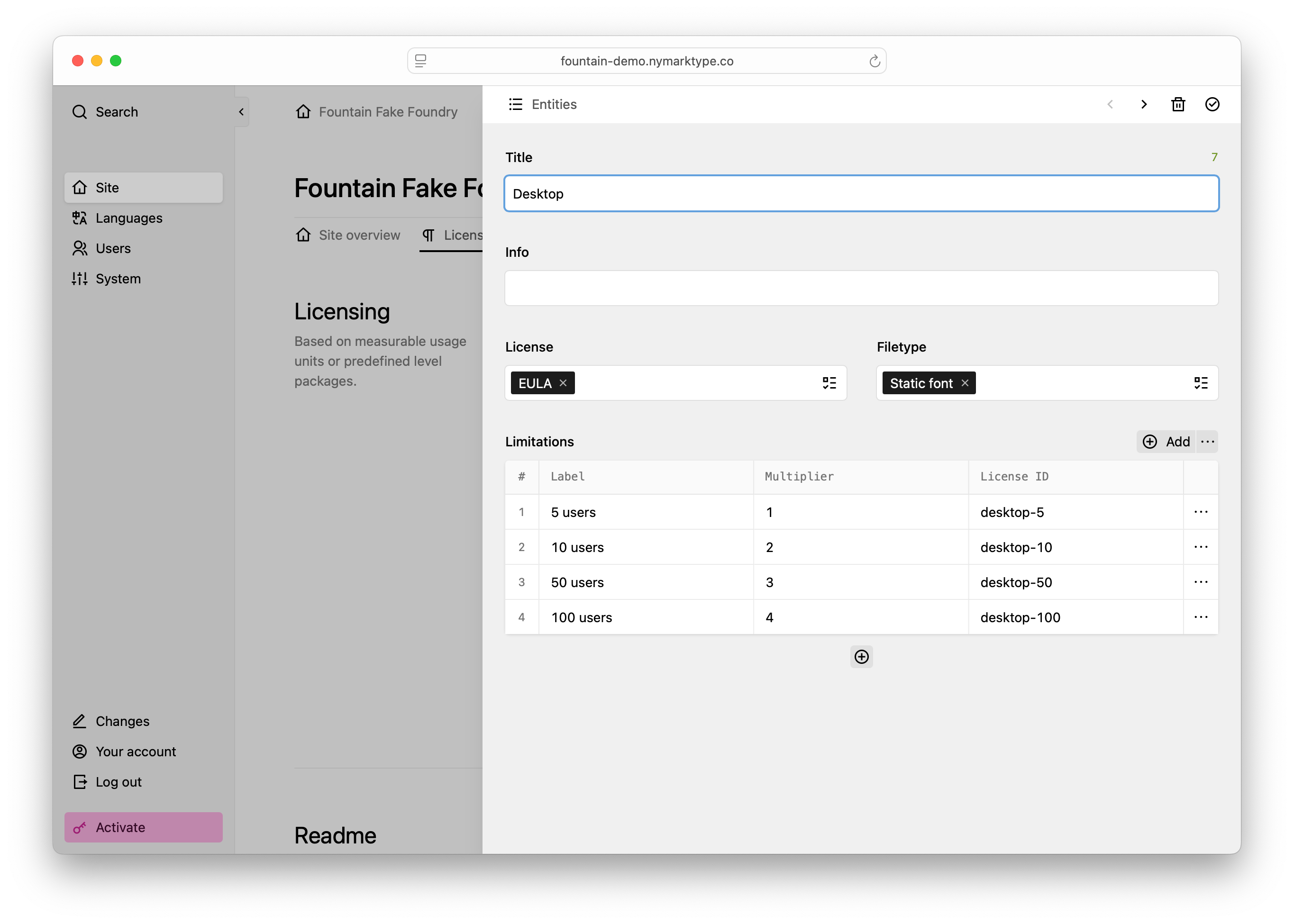
Entity
License tied to a specific measurable unit like users, devices, page views, or employees. Pricing scales directly with the quantity you use.
Level multiplier
Each tier or entity use the muliplier to calculate price. It’s the same across the website, but each font, font bundle, and variable font set it’s own price.
Examples
In this example we’re using tiers, and with a single font. For each tier (and entity) you can choose what file type each level grants access to.
| Tier | Base price | Multiplier | Price | Access |
|---|---|---|---|---|
| Small | €30 | 1 | €30 | static font |
| Medium | €30 | 1.8 | €54 | static font, static webfont |
| Large | €30 | 2.5 | €75 | static font, static webfont, variable font |
Entities work in a similar way, you can set up an unlimited number of them. The main distinction is that entities are grouped by a measurable unit (e.g., users, devices, page‑views), whereas tiers are pre‑built packages.
Important note
No version history license ID’s
If you need to change a license ID, you must also make sure to update every related purchase record; otherwise the system will become inconsistent, since old purchases will refer to license ID and allow users to download fonts based on this.
Keep original ID’s unless you’re sure you’ll apply the change. Plan migrations carefully to avoid breaking existing purchases.
License changes over time
Every purchase locks in the license exactly as it stood that day. Since a license is a legal document, that record matters. You can’t retroactively change terms a customer already agreed to.
Fountain handles this automatically: each purchase saves its own snapshot of the license, so you’re free to revise your terms whenever you like without affecting past sales. A customer who re-downloads five years from now gets the exact license that was in effect on their purchase date — no version tracking, no manual copies, nothing to maintain.